


You may also like
-

Cycles La Torpille Poster
Michel Liebeaux · 1923 · A bicycle poster with floral wit and strong Art Deco color
Poster from €9 · Framed from €16
-

Cycles Bastaent Paris Poster
Charles Tichon · 1895 · Energetic cycling poster with bold Belle Epoque lettering and vivid blue atmosphere
Poster from €9 · Framed from €16
-

Cycles Terrot Dijon Poster
Unknown artist · 1900 · Dramatic French cycling poster showing a rider racing past a tunnel and train
Poster from €9 · Framed from €16
-

Rudge Poster
Jean de Paleologue · 1898 · Art Nouveau bicycle poster with winged muse lifting a gleaming cycle above crowds
Poster from €9 · Framed from €16


-

"Very nice Posters. The quality is amazing and we received it very quickly !"
-

"A shop to visit absolutely. Huge selection of posters. We spent more than an hour there !"
-

"Perfect to find gift. Price are very good. An they can frame and pack it on site"
About the Artist
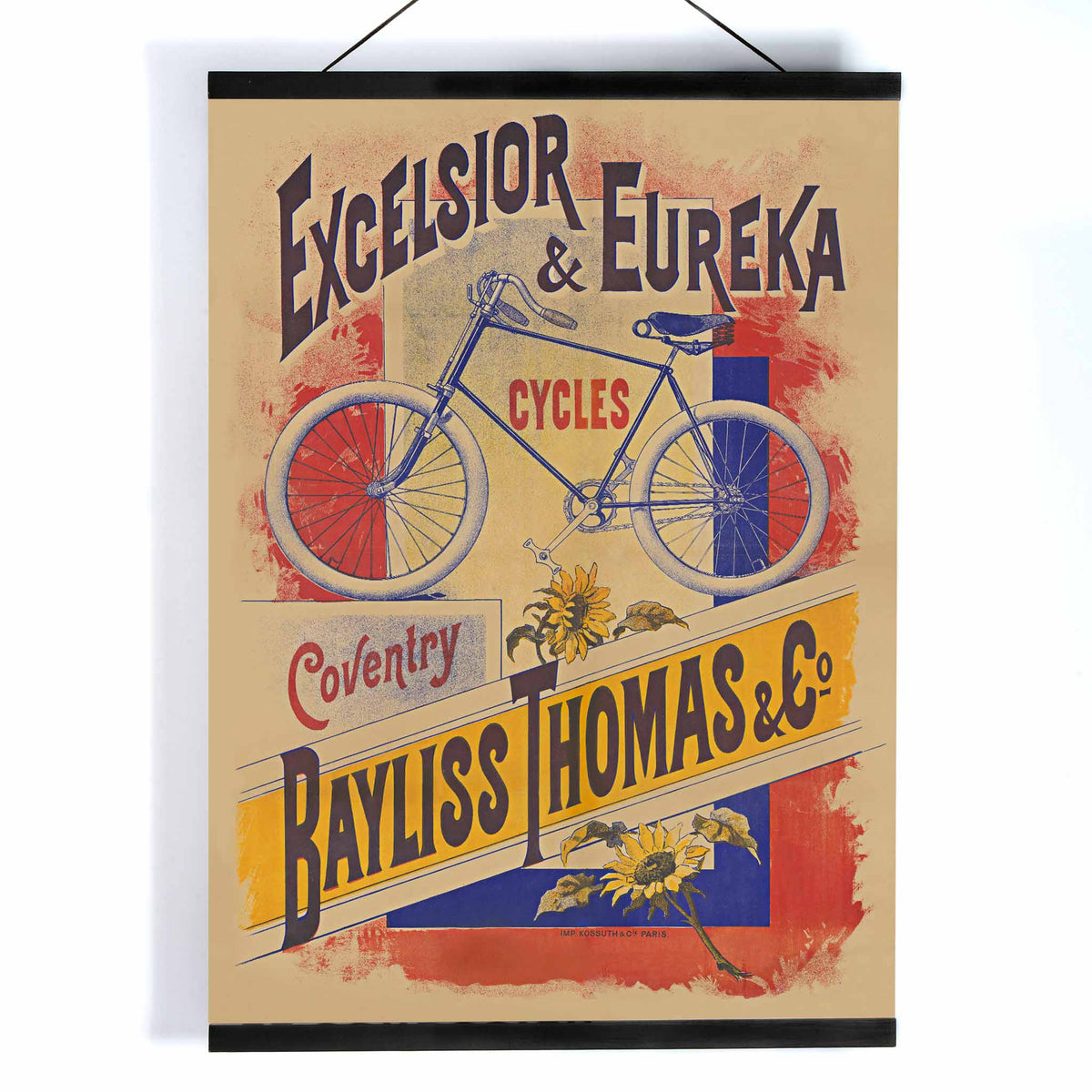
By Bayliss Thomas & Co, this 1895 cycling poster comes from Coventry, a city whose workshops helped shape Britain’s bicycle boom. The company used the language of Victorian advertising to present Excelsior and Eureka as names linked with speed, reliability, and modern travel. In a market crowded with rivals, a vintage poster like this one had to do more than list a product, it had to turn a cycle maker into a trusted public presence. That commercial ambition gives the sheet its historical value as both art print and record of industrial confidence.
The Artwork
The poster was made to sell a bicycle at the height of the golden age of cycling, when the road promised new freedom to riders across Britain. Its message is direct and practical: these cycles belong to progress, movement, and a changing urban life. Bayliss Thomas & Co shaped the image as persuasive wall art for shopfronts and street-facing windows, where a passerby could read the brand at a glance and imagine the ride. Seen today, the vintage print preserves the moment when advertising and design worked together to give everyday transport a sense of aspiration.
Style & Characteristics
The image is built around a blue bicycle set against a warm beige ground, with red accents pushing up around the wheels and behind the lettering. Large curved type crowns the page, while the diagonal yellow banner drives the eye downward toward the company name. The spokes, thin frame, and small floral details give the composition a mix of precision and ornament that feels distinctly Victorian. As a vintage poster, it balances bold typography with decorative color blocks, making the bicycle itself read like the central emblem of the print.
In Interior Design
In a hallway, this vertical poster would bring movement to a narrow wall and echo the shape of a long console or umbrella stand below it. The beige ground and blue cycle sit comfortably with wood, brass, and painted trim, while the red accents add a sharp note without overwhelming the room. Framed as home decor, the artwork gives a clear graphic rhythm to an entrance where coats, shoes, and daily routines gather. Its Victorian lettering and bicycle subject make the space feel connected to cycling history, turning a simple passage into a small gallery of vintage art.