




-

"Very nice Posters. The quality is amazing and we received it very quickly !"
-

"A shop to visit absolutely. Huge selection of posters. We spent more than an hour there !"
-

"Perfect to find gift. Price are very good. An they can frame and pack it on site"
About the Artist
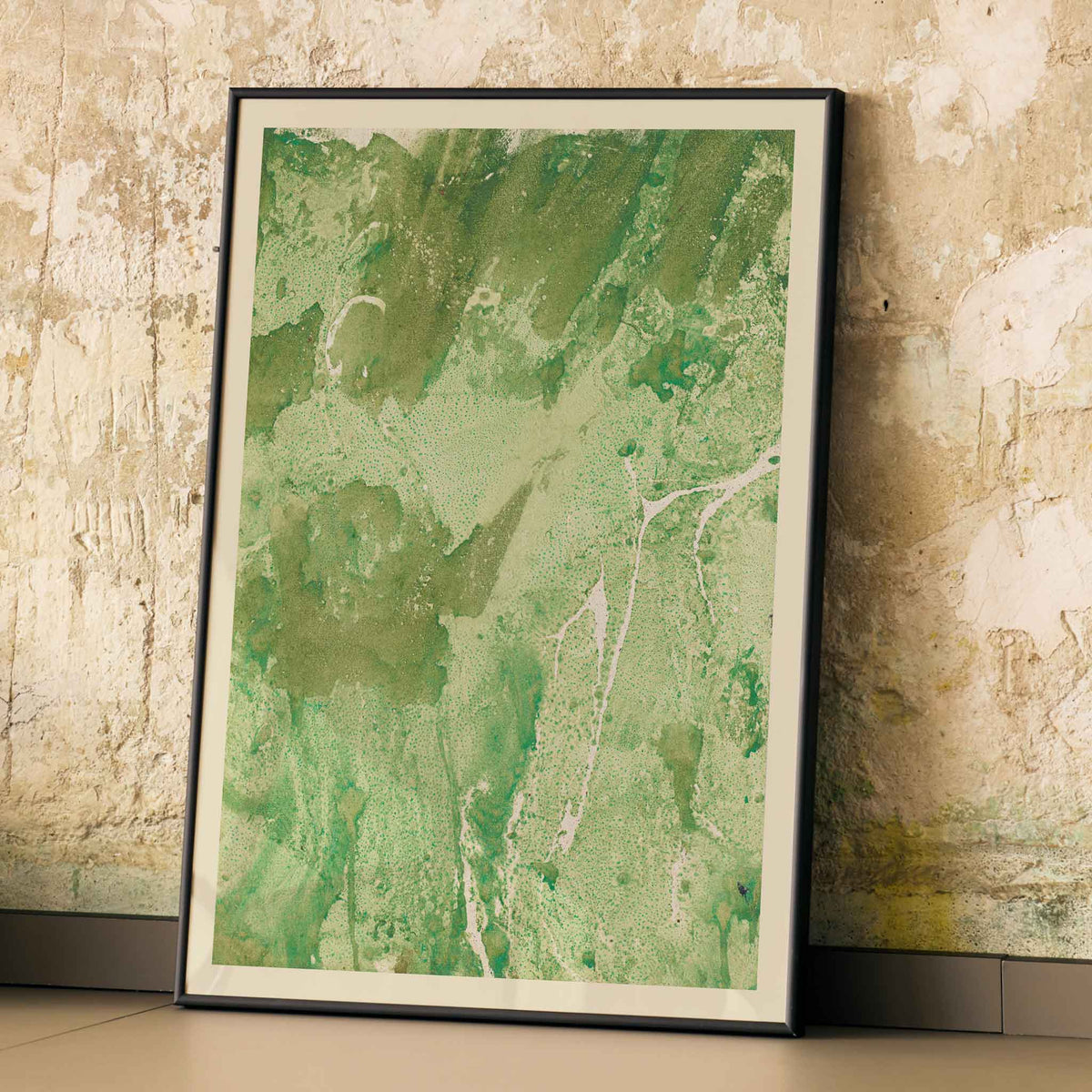
A sheet of decorative paper offers an intimate route into early twentieth-century art. Green marbled paper, credited to Margarete Rumpf and dated 1909, turns attention away from a depicted subject and toward the paper surface itself. Ornament becomes the focus rather than a supporting detail. Biographical information about Rumpf remains limited, so her achievement is clearest in the surviving sheet: a decorative process is treated as an independent image. Reproduced as a Margarete Rumpf fine art print, it lets viewers study a form of pattern usually encountered inside books or across crafted surfaces at close range.
The Artwork
Before a book begins, its endpapers can offer a private moment of discovery. Marbled paper has a long association with bookbinding, where decorated sheets mark the transition from cover to text. The title Green marbled paper connects this 1909 work to that culture of everyday ornament, although no particular commission or intended use is established. Presented now as a vintage poster, the image reverses its usual scale of attention: a surface associated with close handling becomes wall art viewed from across a room. That shift gives the vintage print new purpose while preserving the history of marbling.
Style & Characteristics
A pale, branching line draws the eye down the right half, passing through broad green areas before thinning near the lower edge. Olive passages appear cloudy and dense, while brighter flecks cluster around them like small islands. Across the center, a light field of fine speckles opens between darker swaths that continue below. Fluid marbling leaves feathered boundaries and granular marks across the paper texture. No fixed subject emerges; instead, the green abstract art print suggests weathered stone or water seen from above. The narrow vertical poster format extends that slow downward movement.
In Interior Design
Imagine a quiet reading corner in afternoon light, where a low oak chair stands beside a bookcase and this green marbled paper poster hangs just above seated eye level. A slim dark frame defines the pale border, while the mottled green surface offers detail to study when an open book rests on your lap. Leave the surrounding wall bare so the smallest speckles remain visible instead of dissolving into a gallery arrangement. Such restraint lets the fine pattern guide the interior decoration, giving minimalist home decor a focal point without visual clutter. As wall art, it echoes the close attention invited by marbled endpapers.